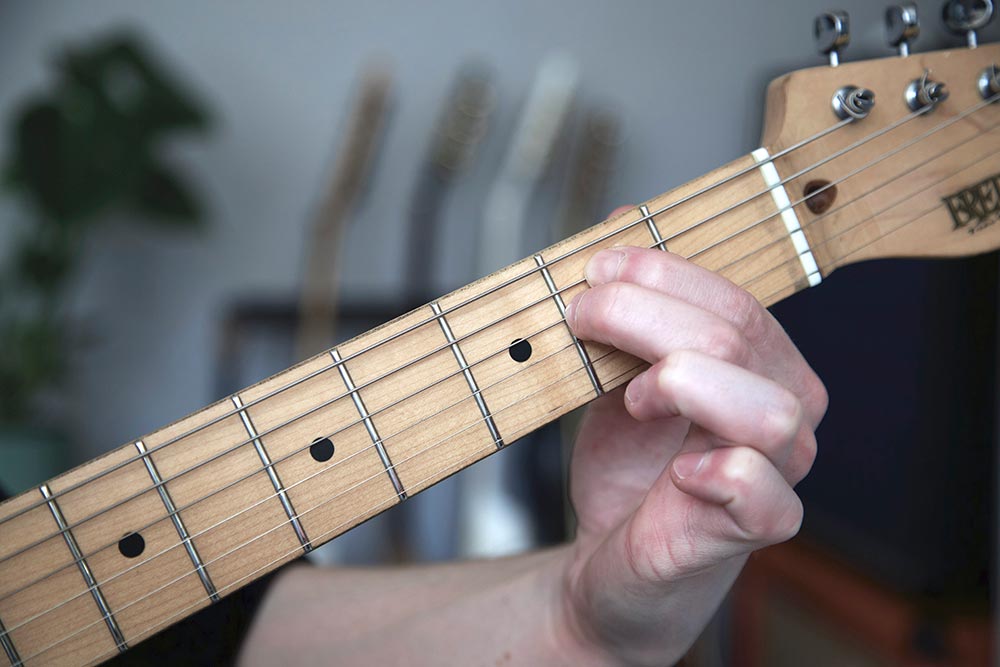
The Guitarist’s Body
The Guitarist’s Body: How to Practice Without Destroying Yourself
Everything your guitar teacher never told you about injury prevention, physical mechanics, and playing guitar for life.
Written By James Stratton 20/05/2026
You finish a two-hour practice session feeling unstoppable. Your fingers are flying, your timing is locked in, and for the first time in weeks, everything clicks.
Then the next morning arrives.
A dull ache creeps through your forearm. Your wrist feels stiff. Your fretting hand doesn’t move quite as freely as yesterday.
Most guitarists ignore it.
That’s the problem.
Playing guitar is often treated purely as a musical skill, but it’s also a demanding physical activity. Every chord, scale, bend, and barre shape places repetitive stress on delicate muscles, tendons, joints, and nerves.
Without proper technique and physical awareness, guitar practice can slowly lead to chronic pain, overuse injuries, and long-term damage.
The good news?
Most guitar-related injuries are preventable.
This guide covers everything guitarists need to know about:
- Guitar injury prevention
- Healthy practice habits
- Proper guitar ergonomics
- Warm-up routines
- Wrist and hand mechanics
- Posture and technique
- Long-term playing health
Whether you’re a beginner or experienced player, these habits can help you play better, longer, and pain-free.

The Guitarist’s Body
Why Guitar Injuries Are More Common Than Most Players Realise
Many guitarists assume pain is simply part of learning.
It isn’t.
Research on musicians consistently shows high rates of playing-related musculoskeletal disorders (PRMDs), especially among guitarists, pianists, and violinists.
The repetitive and precise nature of guitar playing places constant stress on:
- Finger tendons
- Wrist joints
- Forearm muscles
- Shoulder stabilisers
- Nerves running through the wrist and arm
Professional musicians often have access to physiotherapists and performance specialists.
Most hobby guitarists do not.
Instead, many players develop harmful habits through:
- Excessive practice
- Poor posture
- Bad technique
- Over-gripping
- Ignoring pain signals
- Improperly set-up guitars
Over time, these issues compound.
Common Guitar Injuries Every Player Should Know
Tendinitis and Tenosynovitis
Inflammation of tendons caused by repetitive strain.
Common symptoms include:
- Burning forearm pain
- Finger stiffness
- Wrist discomfort
- Pain during movement
Carpal Tunnel Syndrome
Compression of the median nerve in the wrist.
Symptoms often include:
- Tingling fingers
- Numbness
- Weak grip strength
- Night-time pain
De Quervain’s Tenosynovitis
A painful condition affecting the thumb side of the wrist, often caused by repetitive thumb movement and awkward wrist angles.
Guitarist’s Elbow (Epicondylitis)
Similar to tennis elbow or golfer’s elbow.
Pain develops around the elbow due to repetitive picking, strumming, or gripping tension.
Rotator Cuff Strain
Poor guitar positioning and heavy instruments can overload the shoulder muscles and upper back.
Focal Dystonia
A rare but serious neurological condition causing involuntary muscle contractions and loss of motor control.
Often linked to excessive repetitive practice and tension.
Understanding the Physical Demands of Guitar Playing
Guitar playing may look relaxed, but mechanically it’s extremely demanding.
The muscles controlling your fingers actually originate in your forearm.
Long tendons travel through the wrist and attach to your fingers. Every movement requires precise coordination across:
- Muscles
- Tendons
- Nerves
- Joints
- Ligaments
Now multiply those movements thousands of times during a single practice session.
That’s why poor mechanics eventually cause problems.

The Guitarist’s Body: How to Practice Without Destroying Yourself
The 7 Most Dangerous Guitar Practice Habits
1. The Death Grip
Beginners commonly squeeze the neck far harder than necessary.
This creates:
- Excess tendon strain
- Forearm fatigue
- Slower chord changes
- Reduced accuracy
Fix It
Use the minimum pressure required for a clean note.
A lighter touch improves both speed and endurance.
2. Practising Through Pain
Pain is not a badge of honour.
There’s a difference between:
- Normal fingertip soreness
- Dangerous joint or nerve pain
Warning Signs
Stop immediately if you experience:
- Burning sensations
- Tingling
- Numbness
- Sharp wrist pain
- Persistent aches
Ignoring symptoms can turn small injuries into chronic conditions.
3. Bent Wrists and Collapsed Hand Position
Extreme wrist bending compresses tendons and nerves.
This commonly happens during:
- Barre chords
- Low guitar positioning
- Poor seated posture
Better Technique
Keep the wrist relatively neutral whenever possible.
4. Staying in One Position Too Long
Even perfect posture becomes problematic if held too long.
Static positioning reduces circulation and increases fatigue.
Solution
Move regularly during practice.
Small adjustments matter.
5. Skipping Warm-Ups
Athletes warm up.
Guitarists should too.
Cold muscles and tendons are less flexible and more vulnerable to strain.
6. Increasing Practice Time Too Quickly
After a break, many players suddenly jump into long sessions.
This overloads deconditioned tendons.
Follow the 10% Rule
Increase practice volume gradually each week.
7. Playing a Poorly Set-Up Guitar
High string action forces excessive finger pressure.
A professional setup can dramatically reduce physical strain.
Guitar Ergonomics: The Foundation of Injury Prevention
Sitting Position
Your posture affects every part of your playing.
Ideal Setup
- Feet flat on the floor
- Back naturally upright
- Shoulders relaxed
- Guitar positioned high enough to reduce wrist bending
Classical vs Casual Position
The classical guitar position often provides better wrist alignment and reduced strain.
Even non-classical players can benefit from:
- Raising the neck angle
- Bringing the guitar higher
- Reducing wrist collapse
Strap Height for Standing
Low-slung guitars may look cool, but they force severe wrist bending.
Better Strap Position
Keep the guitar close to seated height when standing.
Your wrists and shoulders will thank you.
Heavy Guitars and Shoulder Strain
Heavier guitars increase stress on the neck and shoulders.
Helpful Upgrade
Use a wide padded strap to distribute weight evenly.
The Best Guitar Warm-Up Routine
A proper warm-up should take 5–10 minutes.
It dramatically reduces injury risk.
Step 1: Increase Circulation
Wrist Circles
10 slow rotations each direction.
Finger Fans
Spread fingers wide and relax repeatedly.
Hand Shakes
Loosen tension through the wrists and forearms.
Step 2: Gentle Mobility Work
Prayer Stretch
Stretch the inner wrists gently.
Hold for 20 seconds.
Reverse Prayer Stretch
Targets the opposite forearm muscles.
Forearm Stretch
Stretch both flexors and extensors carefully.
Important
Stretching should never feel sharp or painful.
Step 3: Graduated Playing
Start slowly before tackling difficult material.
Good Warm-Up Exercises
- Chromatic runs
- Open chord changes
- Slow scales
- Light fingerpicking
Focus on relaxation, not speed.
How to Structure Practice Sessions Safely
The 45/10 Rule
Practice for a maximum of 45 minutes before taking a 10-minute break.
During breaks:
- Stand up
- Move around
- Relax the hands
- Stretch gently
Alternate Difficult and Easy Material
Avoid spending an entire session on high-tension exercises.
Mix:
- Technical drills
- Songs
- Improvisation
- Relaxed playing
This distributes physical stress more evenly.
Track Practice Volume
Sudden increases in playing time are one of the biggest injury triggers.
Keep a rough practice log and increase gradually.
Warning Signs You Should Never Ignore
Seek professional advice if you experience:
- Tingling or numbness
- Persistent forearm pain
- Night-time symptoms
- Swelling
- Weakness
- Loss of coordination
- Pain lasting more than 24 hours
Early treatment is far more effective than waiting.
The POLICE Method for Minor Guitar Injuries
Modern recovery guidelines use the POLICE method:
Protect
Avoid painful movements.
Optimal Loading
Gentle movement supports healing better than complete immobilisation.
Ice
Apply wrapped ice for 10–15 minutes.
Compression
Gentle support can reduce swelling.
Elevation
Raise the affected limb to reduce inflammation.
Playing Guitar with Chronic Conditions
Arthritis
Helpful adjustments include:
- Lighter gauge strings
- Lower action
- Using a capo
- Shorter sessions
Hypermobility
Focus on strength and joint stability rather than flexibility.
Carpal Tunnel Syndrome
Many players continue successfully with:
- Better wrist positioning
- More breaks
- Nerve gliding exercises
- Physiotherapy support
Why Slow Practice Makes You Better Faster
One of the biggest mistakes guitarists make is practising too fast too soon.
Slow practice helps your brain build:
- Cleaner movement patterns
- Better timing
- Efficient muscle coordination
- Reduced tension
Fast, tense practice teaches your body bad habits.
Remember
Speed is built from precision and relaxation.
Not force.
Building a Lifetime of Guitar Playing
The guitarists who continue playing comfortably into their 60s and 70s usually share the same habits:
- Efficient technique
- Good posture
- Smart practice routines
- Body awareness
- Consistent warm-ups
- Respect for recovery
Longevity isn’t luck.
It’s strategy.
Guitar Health Checklist
Before Playing
- Warm up hands and wrists
- Stretch gently
- Start with easy exercises
- Check posture
- Relax unnecessary tension
During Practice
- Take breaks every 45 minutes
- Use minimal finger pressure
- Change positions regularly
- Stay aware of tension
After Practice
- Cool down with light stretching
- Monitor discomfort
- Rest if symptoms appear
Seek Help Immediately If You Notice
- Tingling
- Numbness
- Swelling
- Persistent pain
- Weakness
- Loss of control
Check This
Your hands are your most important instrument.
Not your guitar.
Not your amp.
Not your pedals.
The habits you build now determine whether guitar remains a lifelong source of enjoyment or becomes a source of chronic pain.
Warm up properly.
Practise intelligently.
Use good posture.
Listen to your body.
And most importantly, remember this:
Healthy guitar playing isn’t about practising harder.
It’s about practising smarter.