Buying Your First Guitar
What to Look for When Buying Your First Guitar | Beginner Guitar Guide
By James Stratton ©
The right first guitar makes learning feel smooth, motivating, and addictive. The wrong one makes every chord feel like a fight.
Walking into a guitar shop for the first time is overwhelming — and choosing the wrong instrument is one of the fastest ways to quit before you’ve even begun.
A great first guitar makes learning enjoyable. A bad one makes everything harder than it needs to be.
This guide strips away the noise and shows you exactly what matters — so you get it right the first time.
If You Remember Just 3 Things
- Choose a guitar that matches the music you actually want to play
- Prioritise low, comfortable action
- Avoid ultra-cheap beginner packs
Get these right, and you’re already ahead of most beginners.
1. Decide on Your Style First
Before you think about budget, brand, or specifications, ask yourself one question:
What kind of music do you actually want to play?
There is no universally “best” beginner guitar — only the right one for your goals.
- Acoustic (steel-string): Great for pop, folk, singer-songwriter
- Classical (nylon): Softer on fingers, ideal for classical or younger players
- Electric: Easier to press, perfect for rock, blues, metal
- Semi-acoustic: Warmer tone, often used in jazz and blues
The biggest mistake beginners make isn’t buying the wrong guitar — it’s buying one that doesn’t excite them enough to pick it up every day.
If you love electric guitar music, start on electric. Don’t “work up to it.”
2. Action: The Single Most Important Factor
“Action” is the height of the strings above the fretboard.
It’s the difference between:
- a guitar that feels smooth and easy
- and one that feels stiff, painful, and frustrating
High action means you have to press harder. That slows you down, hurts your fingers, and makes practice sessions shorter.
This is the hidden reason so many beginners quit early — not lack of ability, but an instrument working against them.
A good beginner setup should feel surprisingly easy to press.
Quick test in a shop:
Press down a simple chord (like E minor).
If it feels like effort, the action is too high.
2.5 Try This in the Shop (Most People Don’t)
Most beginners just strum randomly. That tells you almost nothing.
Instead:
- Press one simple chord
- Play each string slowly
- Listen for buzzing or dead notes
Then pick up a second guitar and repeat.
Even as a beginner, you’ll feel the difference immediately.
3. Ergonomics: Does It Fit Your Body?
A guitar that doesn’t fit you creates tension — and tension kills progress.
Body Size
- Adults: full size
- Ages 8–11: 3/4 size
- Younger children: 1/2 size
A slightly bigger guitar is fine. One that’s too small gets outgrown quickly.
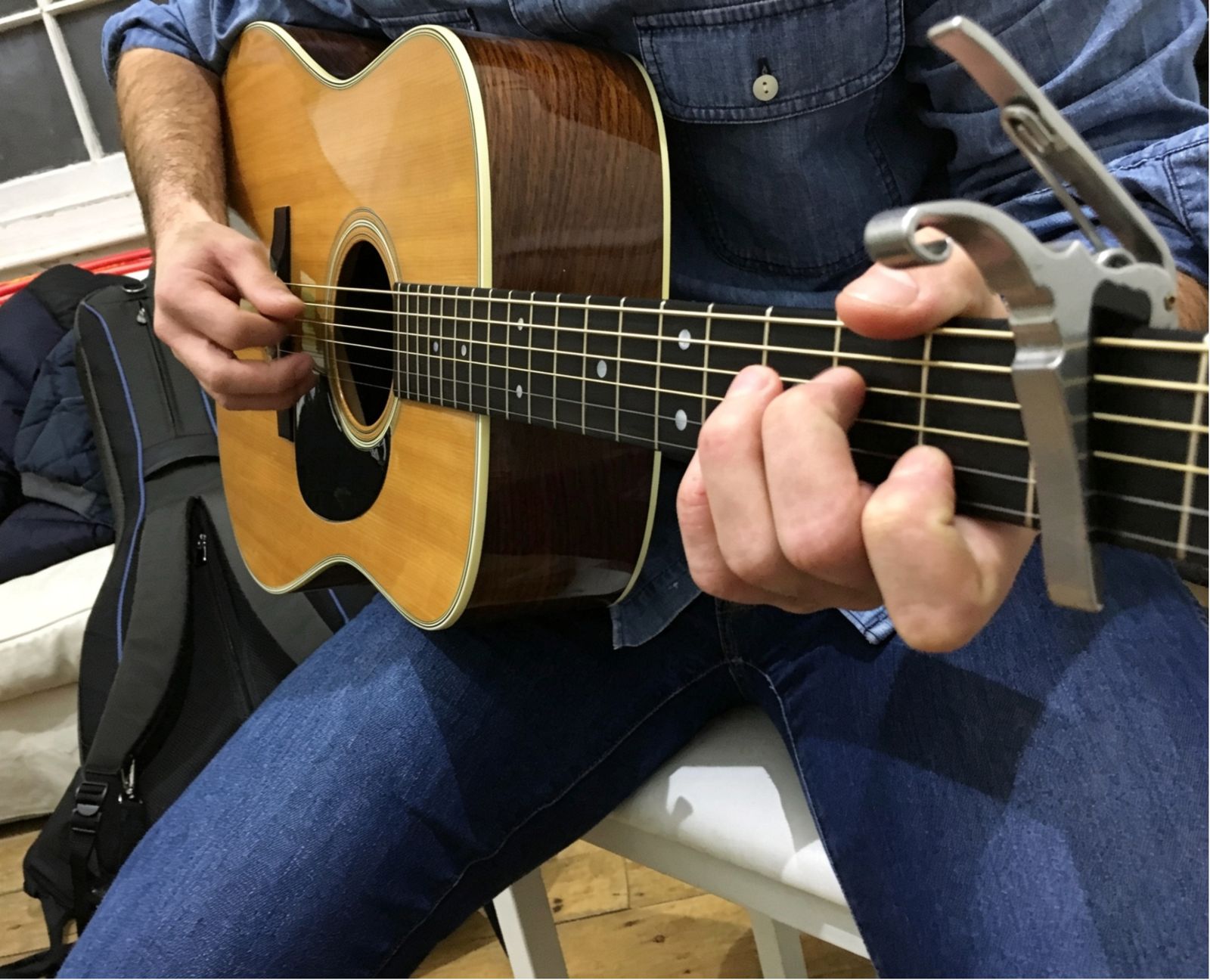
What to Look for When Buying Your First Guitar
Neck Feel
Some necks are:
- thinner and flatter (easier for smaller hands)
- thicker and rounder (preferred by some players)
If your hand feels strained or stretched, it’s not the right fit.
Weight
This matters more than people think.
If the guitar feels heavy after 2–3 minutes, it will affect how long you practise.
Try it sitting and standing if possible.
Simple rule:
If your wrist bends sharply or your shoulder lifts to compensate, the guitar isn’t right for you.
4. Tone and Sound Quality
At beginner level, playability matters more than tone.
But tone still affects one important thing:
👉 Whether you actually want to play the guitar
If it sounds dull or lifeless to you, you’ll naturally practise less.
Acoustic guitars
- Solid tops (spruce or cedar) sound better — usually £300+
- Under £200: laminate is fine for beginners
Electric guitars
Pickups matter most:
- Single-coils: brighter, clearer (blues, clean tones)
- Humbuckers: warmer, thicker (rock, metal, jazz)
Don’t overthink this — choose what matches your taste.
5. Ask Your Guitar Teacher First
This is the easiest way to avoid mistakes.
A simple message like:
“I’m buying my first guitar — is this a good option?”
can save you weeks of frustration.
Most teachers are happy to help before lessons even begin — and many will recommend specific models they’ve seen work well for beginners.
6. Before You Buy — Run This 60-Second Check
- Does it suit the style of music I want to play?
- Does it feel easy to press down the strings?
- Does the neck feel comfortable in my hand?
- Is it the right size for my body?
- Does it stay in tune after a few minutes?
- Are there any buzzes or dead notes?
- Have I asked a teacher or experienced player?
- Am I avoiding ultra-cheap beginner packs?
If you can tick these off, you’re in a very good place.
7. One Thing to Avoid
Avoid “beginner guitar packs” from non-specialist retailers.
They look like a bargain — but they’re one of the most common reasons people give up.
These guitars often have:
- high, uncomfortable action
- poor tuning stability
- cheap components
They make even simple chords frustrating.
Spend £30–£50 more, and you move from fighting the instrument to actually enjoying it.
That difference matters more than anything in your first month.
8. The Real Minimum Budget (Honest Answer)
If you want a guitar that genuinely helps you learn:
- Acoustic: £80–£150 minimum
- Electric (with amp): £120–£250
Below this, quality becomes inconsistent — and you’re taking a gamble.
You don’t need to spend a fortune.
But going too cheap often costs you motivation.
You know
A good first guitar doesn’t just sound better — it makes learning feel easier, faster, and more rewarding.
And that’s what keeps you coming back.
Not Sure Which Guitar Is Right for You?
Book a first lesson and we’ll help you choose the right guitar before you spend a penny — so your first weeks of playing feel smooth, not frustrating.
→ Book Your First Lesson