Jimi Hendrix’s Woodstock performance for cinematic release
Jimi Hendrix at Woodstock: The Definitive Story of the Legendary 1969 Performance
Monday Morning Magic — The Performance That Defined Woodstock
The 1969 Woodstock Music & Art Fair, held on Max Yasgur’s farm in Bethel, New York, remains one of the defining cultural events of the 20th century. Across three days of rain, mud, and music, nearly half a million people gathered in a spirit of peace, unity, and countercultural expression. Performances by Santana, Janis Joplin, The Who, and Crosby, Stills, Nash & Young helped shape the festival’s legend. Yet the moment that ultimately defined Woodstock came last.
Due to weather and technical delays, Jimi Hendrix’s closing set was pushed from Sunday night into Monday morning. At approximately 9:00 a.m. on August 18, 1969, he finally stepped onstage. By then the peak crowd of 400,000–500,000 had dwindled to an estimated 30,000–40,000 (some accounts place it higher, closer to 180,000). What those who remained witnessed was far more than a concert. It was a cultural statement, a sonic portrait of America in turmoil, and one of the most influential live performances in music history.
Jimi Hendrix
The Road to Woodstock: A New Band, A New Vision
By 1969 Hendrix had already transformed rock music. After moving to London in 1966 and forming the Jimi Hendrix Experience, he released three groundbreaking albums—Are You Experienced, Axis: Bold as Love, and Electric Ladyland—redefining the electric guitar as a vehicle for emotion, experimentation, and pure sonic invention.
The Experience had dissolved by mid-1969. Seeking greater creative freedom, Hendrix assembled a new, more improvisational group he called Gypsy Sun and Rainbows:
- Mitch Mitchell — drums
- Billy Cox — bass
- Larry Lee — rhythm guitar and vocals
- Juma Sultan and Jerry Velez — percussion
This was their first major public performance. Hendrix was Woodstock’s highest-paid artist, receiving $18,000 (roughly $140,000–$150,000 in today’s dollars). Despite the rain delays and logistical chaos, he chose to wait for dawn rather than play earlier. He later explained simply that he wanted to play for the morning light.
That Monday Morning: The Setting, The Man, The Opening
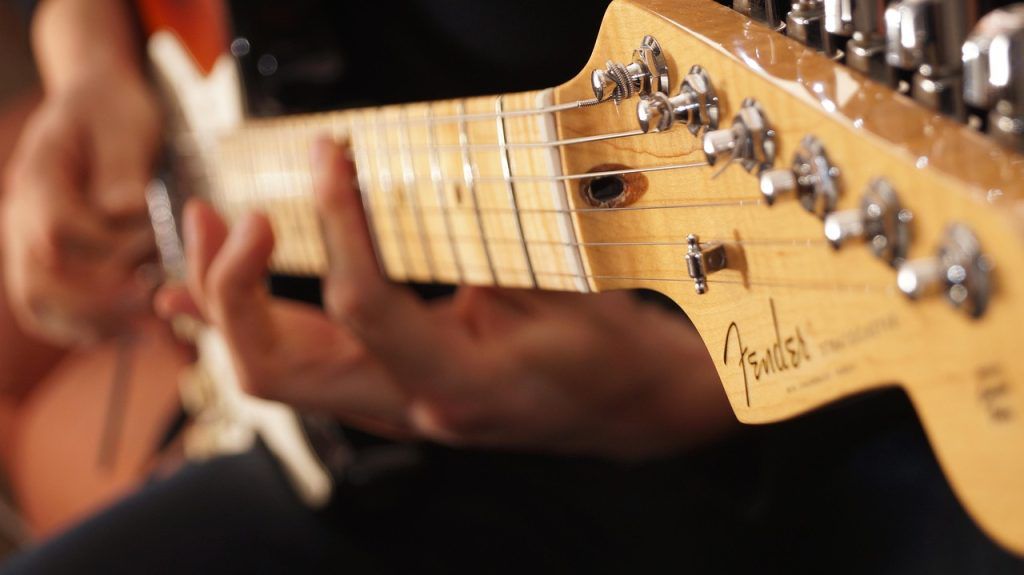
August 18, 1969, around 9:00 a.m. The sky had cleared. Sunlight spilled across the hills as Hendrix walked onstage in his white fringed jacket, headband, beads, and playing his white 1968 Fender Stratocaster.
He greeted the exhausted remaining crowd with a casual “Good morning.” Over the next roughly two hours (approximately 9:00–11:15 a.m.), Hendrix and the band delivered a fluid, exploratory set that blended rock, blues, psychedelia, and extended improvisation. The performance mixed familiar favorites with new and unreleased material.
The Star-Spangled Banner: The Moment That Changed History
Near the heart of the set, after a long medley that included “Voodoo Child (Slight Return)” and “Stepping Stone,” Hendrix stepped forward and began “The Star-Spangled Banner.” What followed became one of the most powerful musical statements of the 20th century.
He preserved the melody while surrounding it with:
- Wailing feedback that evoked jet engines
- Explosive distortion and dive-bombs mimicking artillery and bombs
- Shrieking bends and sirens
- Tender, aching passages that suggested both hope and grief
This was 1969 America—Vietnam, racial tension, generational conflict—translated into pure sound. Hendrix, a Black American and former U.S. Army paratrooper who loved his country, reclaimed the anthem with raw honesty. On The Dick Cavett Show weeks later he said: “I’m an American, so I played it… It’s not unorthodox. I thought it was beautiful.”
The crowd fell silent, then erupted. Captured in the Woodstock documentary, the performance became immortal.
The Rest of the Set: Improvisation, Beauty, and Farewell
After the anthem came “Purple Haze,” followed by the spontaneous “Woodstock Improvisation” into the luminous instrumental “Villanova Junction.” The set closed with a rare encore of “Hey Joe.” Hendrix’s final words to the festival were simple: “Peace… happiness.”
Approximate setlist highlights (order varies slightly across sources):
Message to Love / Hear My Train a Comin’ / Spanish Castle Magic / Red House / Mastermind / Lover Man / Foxy Lady / Jam Back at the House / Izabella / Fire / Voodoo Child (Slight Return) / Stepping Stone / The Star-Spangled Banner / Purple Haze / Woodstock Improvisation / Villanova Junction / Hey Joe (encore).
Why This Performance Endures
Music as a language beyond words
Hendrix expanded the guitar’s expressive range, proving that feedback, distortion, and pure noise could carry deep emotional and political meaning.
A bridge in a divided nation
His multiracial band and reimagined anthem stood as a symbol of unity during one of America’s most fractured eras.
Hope within turmoil
Even amid chaos and feedback, the original melody survived—a powerful metaphor for resilience and the possibility of healing.
Legacy: From Bethel to History
Initial reactions were mixed, but the performance quickly became iconic. It remains one of the most analyzed and celebrated moments in rock history and a defining image of the 1960s. (Note: While Hendrix’s broader catalog, including Are You Experienced, is recognized by the Library of Congress National Recording Registry, the Woodstock “Star-Spangled Banner” itself holds towering cultural status through the film, recordings, and collective memory.)
Hendrix died just over a year later, on September 18, 1970, at age 27. He never fully witnessed how completely that Monday-morning set would come to symbolize both American art and the spirit of an era. Yet the message he left behind still resonates:
Peace. Happiness.
The Dawn Still Sings
More than half a century later, Hendrix’s Woodstock performance remains a landmark in music history—a reminder that art can confront hard truths, inspire hope, and illuminate a path forward. Beneath the rising sun on Max Yasgur’s farm, he played not only notes, but the soul of a generation.
Key Facts — Jimi Hendrix at Woodstock at a Glance
| Detail | Information |
|---|---|
| Date & Time | August 18, 1969 · ~9:00 a.m.–11:15 a.m. |
| Location | Max Yasgur’s Farm, Bethel, New York |
| Band | Gypsy Sun and Rainbows |
| Guitar | White 1968 Fender Stratocaster |
| Set Length | ~2 hours |
| Crowd | ~30,000–40,000 remaining (peak ~400,000–500,000) |
| Signature Moment | The Star-Spangled Banner |
| Fee | $18,000 (highest of the festival) |
| Legacy | Defining cultural moment of the 1960s |
Jimi Hendrix’s Woodstock performance for cinematic release | News | NME.COM http://www.nme.com/news/jimi-hendrix—2/67038 via @NME
London Guitar Academy
Guitar Lessons London
Guitar Lesson