The Brilliance of Carlos Santana
Understanding the Brilliance of Carlos Santana’s Soloing Style
Carlos Santana Guitar Style: Realeasing the Magic of His Supernatural Solos
The Supernatural Aura of Santana
Few guitarists in history have married emotional depth with technical brilliance quite like Carlos Santana. His work on the 1999 Grammy-winning album Supernatural reignited global interest in Latin rock and redefined what expressive soloing could sound like. Santana doesn’t shred—he sings through the guitar, weaving soulful, hypnotic lines that feel more like vocal arias than technical exercises.
But what exactly gives Santana’s solos their supernatural quality?
This article dives deep into his soloing style with warmth, technical insight, and musical respect—exploring how melody, tone, phrasing, and cultural roots blend into one of the most recognisable and emotive guitar voices of all time.
1. Tone First: The Voice of a Guitar God
Before a single note is played, Santana’s signature tone tells a story.
Key Elements of Santana’s Tone:
-
Guitar: PRS Santana Signature (usually mahogany with a thick set neck)
-
Pickups: High-output humbuckers with creamy midrange
-
Amp: Mesa Boogie Mark I (used for its warm, sustaining overdrive)
-
Effects: Minimal—mostly natural tube saturation, light reverb, and sometimes a wah pedal
His tone is vocal, sustain-rich, and silky, often compared to a human voice. It bridges jazz smoothness, rock aggression, and Latin warmth, forming the foundation for his melodic storytelling.
“My guitar is not a thing. It is an extension of myself. It is who I am.” – Carlos Santana
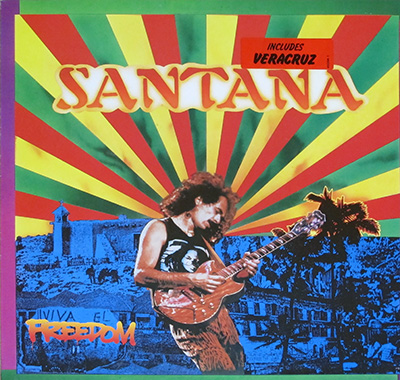
The Brilliance of Carlos Santana
2. Melody Over Mechanics
In an age when speed is often equated with skill, Santana stands out by playing fewer notes with greater meaning.
He favors:
-
Strong melodic motifs over rapid scale runs
-
Call and response phrasing
-
Long sustains that allow a note to breathe and emote
Songs like “Smooth” and “Europa” show how Santana treats melody like a lyrical phrase, letting it evolve naturally rather than forcing complexity.
Modal Magic:
-
Dorian, Aeolian, and Phrygian modes appear often, especially in minor-key jams.
-
He frequently bends into blue notes or major 6ths to create tension and release.
-
His solos often use pentatonic scales, but with modal flavor layered on top.
3. Rhythmic Sensuality: The Latin Underpinning
Santana’s phrasing flows with a rhythmic sway that mirrors Latin dance and Afro-Cuban grooves.
Key Rhythmic Influences:
-
Clave-based rhythms
-
Syncopated phrasing
-
Fluid time feel—he pushes and pulls against the beat like a singer
Even when playing over a rock or pop backing, he injects a Latin pulse. His solos dance, often riding the beat with elegant hesitations, accelerations, and offbeat accents. This gives his playing a living, breathing quality.
4. Emotional Storytelling: From Silence to Climax
Santana is a narrative soloist. His solos follow a classic story arc:
-
Introduction: Soft, melodic phrases—simple and alluring
-
Development: Repetition with variation—building tension
-
Climax: Fewer notes, more sustain, intense vibrato
-
Resolution: Return to theme—often echoing or slightly altering the intro
This cinematic shape makes his solos emotionally satisfying, like watching a hero’s journey in sound.
A prime example is his solo in “Maria Maria”, where his lines build gradually into a joyous crescendo, echoing the vocal melody and expanding it with spiritual fervor.
5. Simplicity as a Superpower
While many players obsess over scales, modes, and technique, Santana focuses on space and phrasing.
He often:
-
Uses repetition for dramatic effect
-
Leaves intentional pauses between phrases
-
Maintains a tight range of notes, favouring depth over breadth
In “Samba Pa Ti”, he builds an entire solo from a handful of notes—bending, phrasing, and emoting each one like it holds the universe.
This is not minimalism for its own sake. It’s a commitment to musical honesty—choosing the right note over the most notes.
6. Vocal Phrasing: Singing Through Strings
Santana’s phrasing is distinctly vocal. He emulates singers with:
-
Slides and bends that mirror pitch glides
-
Vibrato that mimics vocal tremolo
-
Rests and phrases that follow lyrical breath patterns
His solos often feel like duets with the lead singer, not just background embellishments. In fact, on Supernatural, his solos often mirror or answer the vocal melody, making the guitar another voice in the arrangement.
7. Cultural Fusion and Identity
Carlos Santana is Mexican-American and deeply spiritual. His musical voice fuses:
-
Latin traditions (salsa, bolero, mariachi)
-
Blues (B.B. King, Peter Green)
-
Jazz (Miles Davis, Coltrane)
-
Rock and Psychedelia (Jimi Hendrix)
This fusion is not forced—it is authentic expression of his heritage and beliefs.
His spirituality also shines through. Santana often speaks of music as a channel for divine energy. His playing feels sacred—like prayer through sound.
“The most valuable possession you can own is an open heart. The most powerful weapon you can be is an instrument of peace.” – Carlos Santana
️ 8. Supernatural: The Album That Defined a Generation
Released in 1999, Supernatural won 9 Grammys and brought Santana’s playing to a new generation. The album features collaborations with Rob Thomas (“Smooth”), Lauryn Hill, Eric Clapton, and Dave Matthews.
Why it matters musically:
-
Santana adapted his classic style to modern pop/rock grooves
-
He maintained his melodic and tonal identity
-
His solos became bridges between genres, cultures, and generations
On “Smooth”, the solo is iconic:
-
Short melodic hook at the start
-
Gradual build using pentatonic and Dorian flavors
-
Sustained bends with vocal vibrato
-
A final flourish that leaves space and soul in its wake
It’s textbook Santana—and universally accessible.
9. Technical Tools in the Supernatural Toolbox
Let’s break down a few recurring technical traits that define Santana’s soloing:
Techniques:
-
Wide Vibrato: Emotional, exaggerated, mimicking vocalists
-
Sustain Mastery: Long notes that bloom and swell
-
Double Stops: Especially minor 3rds and 6ths
-
Legato Lines: Smooth hammer-ons and pull-offs
-
Tasteful Wah Use: For phrasing emphasis, not effect gimmicks
Harmonic Concepts:
-
Dorian Mode: Especially in minor grooves
-
Major 6ths and 9ths: Adds Latin/jazz color
-
Chromatic Passing Notes: Used melodically, not mechanically
-
Blues Inflections: Over modern/pop chords
10. Soul Over Speed: A Lesson for All Guitarists
Carlos Santana proves that speed and complexity are optional—but soul is essential.
In an era dominated by tapping and hyper-speed shredding, he invites us to slow down, feel each note, and say something meaningful with our playing.
He teaches us:
-
That the guitar is a voice, not just a machine
-
That less is often more
-
That melody outlasts virtuosity
-
That the spirit behind the music is what makes it eternal
Carlos Santana’s Top 5 Albums: Ranking the Iconic Discography
Top 5 Carlos Santana Albums Ranked | Legendary Latin Rock Records
Explore the five greatest Carlos Santana albums of all time. From Abraxas to Supernatural, this ranking celebrates the best of Santana’s legendary Latin rock journey.
The Eternal Fire of Santana’s Sound
Carlos Santana is one of the most soulful and enduring guitarists in modern music history. With a career spanning over five decades, his blend of Latin rhythms, bluesy phrasing, and spiritual energy has created a unique and timeless sound. Santana’s discography is rich, wide-ranging, and full of gems—but five albums rise to the top as his most essential, genre-defining works.
Whether you’re a longtime fan or just discovering the magic of his guitar tone, this article ranks the Top 5 Carlos Santana albums, with warm insights, technical context, and cultural significance.
1. Abraxas (1970)
Key Tracks: Black Magic Woman / Gypsy Queen, Oye Como Va, Samba Pa Ti
Why It’s #1: Abraxas is the definitive Santana album. Released just a year after the band’s explosive debut, it expanded their sound with deeper Latin grooves, jazz textures, and spiritual overtones.
Carlos Santana’s guitar tone is smoother, more expressive, and more mature than on their debut. His solo on Samba Pa Tiis still considered one of the most beautiful and emotive guitar performances ever recorded.
The album is also notable for showcasing keyboardist Gregg Rolie’s incredible organ work and for bringing Tito Puente’s rhythms to the rock mainstream through Oye Como Va.
Legacy: Abraxas went multi-platinum and was inducted into the Grammy Hall of Fame. It remains a timeless masterpiece that defines Santana’s fusion sound.
2. Supernatural (1999)
Key Tracks: Smooth (feat. Rob Thomas), Maria Maria, Love of My Life
Why It’s #2: Supernatural is Santana’s commercial and critical rebirth. This Grammy-sweeping comeback introduced his magic to a new generation while staying true to his melodic, spiritual essence.
What sets this album apart is its collaborative genius. Santana partnered with artists like Rob Thomas, Lauryn Hill, Dave Matthews, and Eric Clapton, creating a genre-spanning experience from pop and R&B to Latin and soul.
His playing here is restrained but powerful, using lyrical phrasing and classic Latin-influenced modes to elevate every song.
Legacy: Supernatural sold over 30 million copies worldwide and won 9 Grammys, including Album of the Year. It marked the ultimate comeback for a legacy artist and remains one of the best-selling albums of all time.
3. Santana III (1971)
Key Tracks: No One to Depend On, Toussaint L’Overture, Everybody’s Everything
Why It’s #3: With Santana III, the band perfected the fiery, jam-band chemistry that first put them on the map. It features the dual-guitar power of Carlos Santana and a then-17-year-old Neal Schon (later of Journey), creating one of the most electric lineups in rock history.
The album is an adventurous mix of Latin jazz, hard rock, and psychedelic blues. Tracks like Toussaint L’Overture are instrumental showcases, packed with polyrhythms, syncopated solos, and blistering organ work.
This is Santana at his most raw and musically fearless.
Legacy: Often considered a fan-favourite among musicians, Santana III captures the band’s peak creative chemistry before their transition into jazz-fusion and spiritual rock.
4. Caravanserai (1972)
Key Tracks: Song of the Wind, Eternal Caravan of Reincarnation, Every Step of the Way
Why It’s #4: Caravanserai marked a dramatic shift. Santana left behind pop structures in favour of jazz-fusion, spiritual mysticism, and instrumental storytelling.
This is not a record of hooks and hits. It’s a journey. Tracks often flow into each other, anchored by Carlos’s lyrical playing and atmospheric textures. His phrasing here draws heavily on the modal exploration of Miles Davis and John Coltrane.
If Supernatural is the most accessible Santana, Caravanserai is the most philosophical and transcendent.
Legacy: Though not as commercially successful, Caravanserai is revered by critics and serious fans as a bold and beautiful evolution in Santana’s artistry.
️ 5. Santana (1969 – Debut Album)
Key Tracks: Evil Ways, Jingo, Soul Sacrifice
Why It’s #5: This is where it all started.
Santana’s self-titled debut introduced the world to a new sound—combining Afro-Cuban rhythms, blues-based guitar, and acid rock intensity. The band’s breakout performance at Woodstock just before the album’s release helped propel it into the mainstream.
The raw power of Soul Sacrifice is still legendary, and Evil Ways gave Santana their first hit. His tone is edgier, and the solos are aggressive and primal.
While less polished than later work, this album birthed a genre.
Legacy: A must-listen for understanding the roots of Latin rock, and a landmark debut that set the stage for decades of influence.
Honourable Mentions
-
Welcome (1973): Jazzier and more experimental
-
Shaman (2002): Supernatural follow-up with some standout moments
-
Moonflower (1977): Blends live and studio recordings beautifully
-
Corazón (2014): A modern Latin pop fusion featuring Pitbull, Gloria Estefan, and others
A Discography That Defies Borders
Carlos Santana’s best albums don’t just showcase guitar excellence—they showcase a fusion of cultures, spiritual depth, and raw emotion. His music transcends genre and language, connecting listeners through feel, fire, and faith.
Whether you gravitate toward the classic Abraxas, the pop glory of Supernatural, or the cosmic journey of Caravanserai, Santana’s top albums prove that soulful playing will always outlast trends.
Channeling the Supernatural
Carlos Santana’s guitar solos are not merely displays of technical ability—they are acts of emotional communion. His ability to balance tone, phrasing, melody, and rhythm with heartfelt passion is what makes him one of the most beloved guitarists of all time.
In every note, he reminds us:
It’s not about what you play—it’s about what you feel.