Fingerstyle Guitar Lessons: The Complete Beginner to Advanced Guide
Fingerstyle guitar is one of the most versatile and expressive ways to play the instrument. Unlike traditional flatpicking, fingerstyle allows guitarists to perform bass lines, rhythm, harmony, percussion, and melody simultaneously. This creates a rich, full sound that can make a single guitarist sound like an entire ensemble.
Whether you're picking up fingerstyle guitar for the first time or looking to refine advanced techniques such as Travis picking, percussive fingerstyle, or alternate tunings, this comprehensive guide will walk you through every stage of development.
In this pillar guide, you'll learn:
- Proper fingerstyle hand positioning
- The PIMA fingerpicking system
- Travis picking and alternating bass techniques
- Finger independence exercises
- Classical fingerstyle arpeggios
- Modern percussive guitar methods
- DADGAD and alternate tunings
- Structured practice routines
- Common mistakes and how to avoid them
By the end of this guide, you'll have a clear roadmap from beginner fundamentals to advanced fingerstyle mastery.
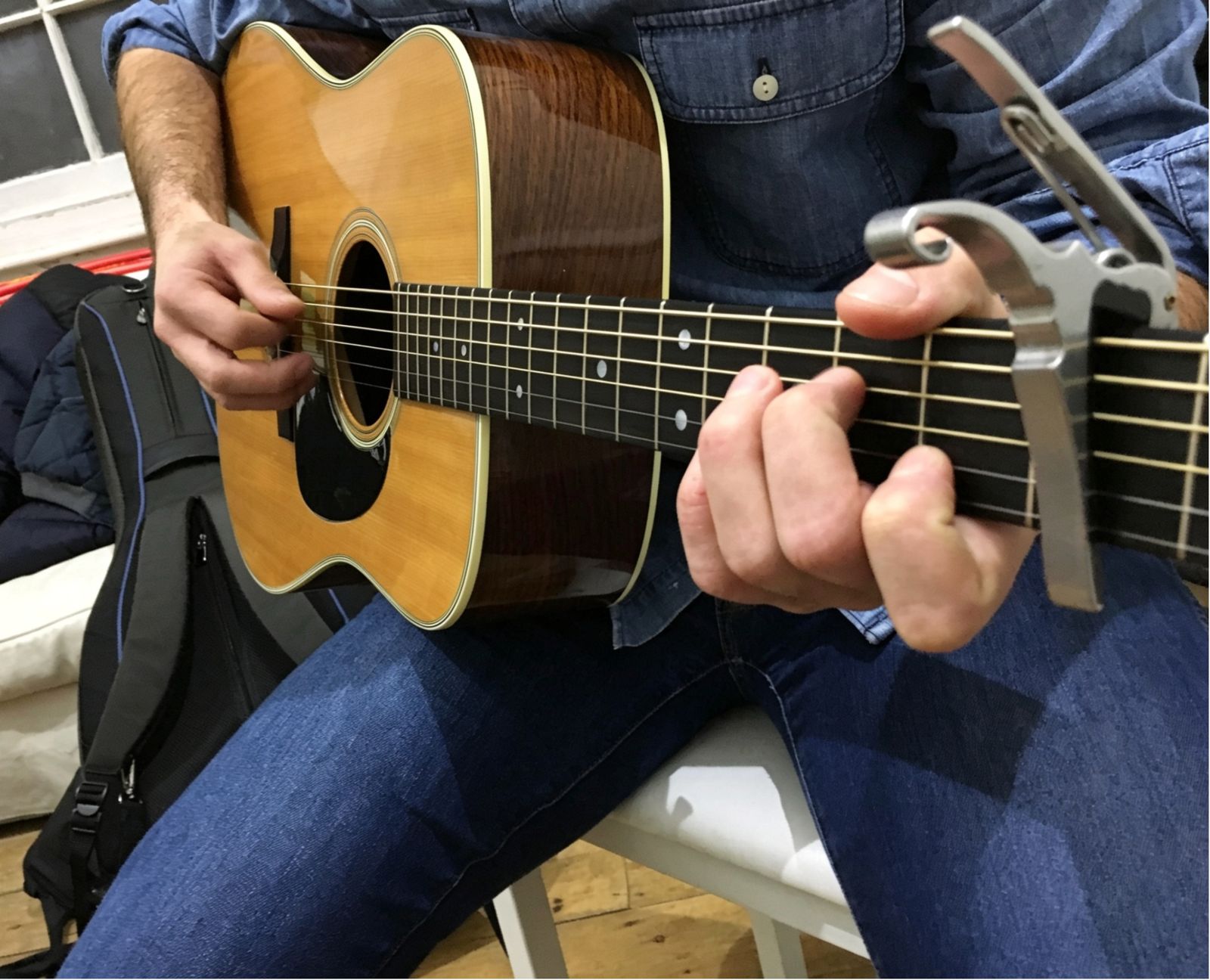
Fingerstyle Guitar
What Is Fingerstyle Guitar?
Fingerstyle guitar is a playing technique where the strings are plucked directly with the fingers rather than with a pick. Each finger is assigned specific strings and musical functions, allowing the player to perform multiple musical parts simultaneously.
A typical fingerstyle arrangement includes:
- Bass notes played by the thumb
- Chordal accompaniment played by the fingers
- Independent melody lines
- Rhythmic and percussive elements
This approach is commonly used in folk, blues, classical, jazz, country, and modern acoustic guitar styles.
Benefits of Learning Fingerstyle Guitar
Learning fingerstyle offers several advantages:
- Greater musical independence
- Improved rhythm and timing
- Better dynamic control
- Ability to play solo arrangements
- Enhanced finger dexterity
- Expanded creative possibilities
Many legendary guitarists including Tommy Emmanuel, Chet Atkins, Merle Travis, Andy McKee, and Jon Gomm have built their careers around fingerstyle techniques.
https://www.youtube.com/watch?v=ePwJpVL0kJw
Fingerstyle Guitar Fundamentals
Proper Hand Position
Your picking hand serves as the engine of fingerstyle guitar. Proper positioning promotes efficiency, speed, and tone quality.
Key fundamentals include:
- Relaxed wrist position
- Slightly curved fingers
- Thumb positioned in front of fingers
- Minimal tension throughout the hand
Developing proper mechanics early prevents limitations later as techniques become more demanding.
Understanding the PIMA System
Fingerstyle notation commonly uses the classical PIMA designation:
| Letter |
Finger |
Function |
| P |
Thumb |
Bass notes |
| I |
Index |
Inner voices |
| M |
Middle |
Melody and harmony |
| A |
Ring |
Upper melody |
| C |
Little finger |
Percussion and special techniques |
Understanding this system makes it easier to read tabs, exercises, and instructional material.
Nails vs. Bare Fingers
Fingerstyle players typically choose one of three approaches:
- Bare fingertips for warmth
- Fingernails for clarity and volume
- Hybrid flesh-and-nail technique for balance
Most modern fingerstyle guitarists prefer a hybrid approach because it combines warmth with articulation.
Travis Picking: The Foundation of Fingerstyle Guitar
Travis picking is one of the most important skills every fingerstyle guitarist should master.
Named after Merle Travis, this technique relies on an independent thumb maintaining a steady alternating bass pattern while the fingers play melody and harmony above it.
Why Travis Picking Matters
Travis picking develops:
- Thumb independence
- Timing accuracy
- Coordination
- Groove and rhythm
These skills become the foundation for more advanced fingerstyle techniques.
Essential Travis Picking Patterns
Every beginner should master:
- Monotonic bass patterns
- Alternating bass patterns
- On-beat pinches
- Off-beat syncopation
- Basic melody integration
Mastery of these exercises creates the coordination needed for more advanced arrangements.
Developing Finger Independence
One of the biggest challenges in fingerstyle guitar is teaching the thumb and fingers to operate independently.
Without finger independence, melodies become locked to bass notes and arrangements sound mechanical.
Exercises That Build Independence
Focus on:
- Continuous eighth-note exercises
- Syncopated melody drills
- Triplet arpeggio patterns
- Alternating string exercises
- Dynamic control studies
Consistent practice gradually trains the hands to function independently.
Classical Fingerstyle Techniques
Modern fingerstyle owes much of its technical foundation to classical guitar training.
Arpeggio Development
Arpeggios teach:
- Finger accuracy
- Consistent tone production
- Smooth string transitions
- Dynamic control
The studies of Matteo Carcassi remain among the most effective exercises for building fluid fingerstyle technique.
Rest Stroke vs. Free Stroke
Two core classical techniques influence modern fingerstyle:
Free Stroke
Used for flowing arpeggios and accompaniment patterns.
Rest Stroke
Used to emphasize melodies and create greater projection.
Combining both techniques allows melodies to stand out clearly from accompaniment.
Modern Percussive Fingerstyle Guitar
Modern fingerstyle has evolved beyond traditional fingerpicking.
Today's players often incorporate percussion directly into the guitar body to create complete rhythmic arrangements.
Common Percussive Techniques
- Thumb slaps
- Snare hits
- Body taps
- Harmonic percussion
- Palm strikes
These techniques transform the guitar into both a melodic and rhythmic instrument.
When to Learn Percussive Fingerstyle
Most players should focus on traditional fingerstyle foundations before introducing percussion.
A strong rhythmic foundation makes advanced techniques significantly easier to master.
DADGAD and Alternate Tunings
Alternate tunings are a major part of modern fingerstyle guitar.
Among these, DADGAD is one of the most popular.
Why Fingerstyle Players Love DADGAD
DADGAD provides:
- Rich open-string resonance
- Easier access to complex voicings
- Modal and cinematic sounds
- Simplified chord shapes
Many contemporary acoustic guitar compositions rely heavily on DADGAD tuning.
Other Popular Fingerstyle Tunings
- Open D
- Open G
- CGDGAD
- Drop D
- Double Drop D
Each tuning offers unique harmonic possibilities.
12-Week Fingerstyle Guitar Practice Plan
Weeks 1–4: Build Foundations
Focus on:
- Hand position
- Thumb control
- Basic Travis picking
- Rhythm accuracy
Weeks 5–8: Expand Coordination
Introduce:
- Arpeggios
- Finger independence drills
- Dynamic control
- Melody integration
Weeks 9–12: Advanced Techniques
Begin exploring:
- Percussive fingerstyle
- Alternate tunings
- Full song arrangements
- Performance skills
Consistency matters more than practice duration. Thirty focused minutes per day can produce remarkable progress.
Common Fingerstyle Mistakes I See Students Make
After teaching hundreds of guitar students at London Guitar Academy, I've noticed that most fingerstyle players struggle with the same few challenges.
1. Moving Too Fast
Many players attempt advanced arrangements before developing a reliable alternating bass. A steady thumb should become automatic before introducing complex melodies.
2. Practicing Without a Metronome
Fingerstyle depends on rhythmic independence. Consistent metronome practice develops timing, groove, and coordination far more effectively than playing freely.
3. Tension in the Picking Hand
Excess tension reduces speed, tone quality, and endurance. A relaxed hand position is essential for long-term progress.
4. Ignoring Dynamics
Fingerstyle is more than hitting the correct notes. Learning to control volume, tone, and articulation transforms exercises into music.
5. Skipping the Fundamentals
Students who spend time mastering Travis picking, finger independence, and basic arpeggios almost always progress faster than those chasing advanced techniques too early.
Frequently Asked Questions
How long does it take to learn fingerstyle guitar?
Most beginners can develop basic fingerstyle coordination within four to six weeks of consistent practice. Advanced arrangements typically require several months of focused study.
Is fingerstyle harder than using a pick?
Fingerstyle requires greater coordination initially, but many players find it offers more musical freedom once the fundamentals are mastered.
Can I learn fingerstyle on an electric guitar?
Yes. Fingerstyle techniques work on both acoustic and electric guitars.
Do I need long fingernails?
No. Many successful fingerstyle players use bare fingers, while others use nails or a hybrid approach.
What is the best fingerstyle guitar for beginners?
Any well-setup acoustic or electric guitar can be used to learn fingerstyle. Comfort and playability matter more than price.
Always Play Guitar
Fingerstyle guitar is a lifelong journey that combines technical precision, rhythmic control, and musical expression. By mastering thumb independence, finger coordination, arpeggios, alternate tunings, and modern percussive techniques, you can develop the skills needed to perform complete solo arrangements across virtually any genre.
Use this guide as your central learning resource and continue exploring specialized lessons on Travis picking, finger independence, alternate tunings, and advanced fingerstyle arrangements to accelerate your progress.